How sea freight really works
How Sea Freight Really Works? 🚢
Many people see only the vessel sailing across the ocean.
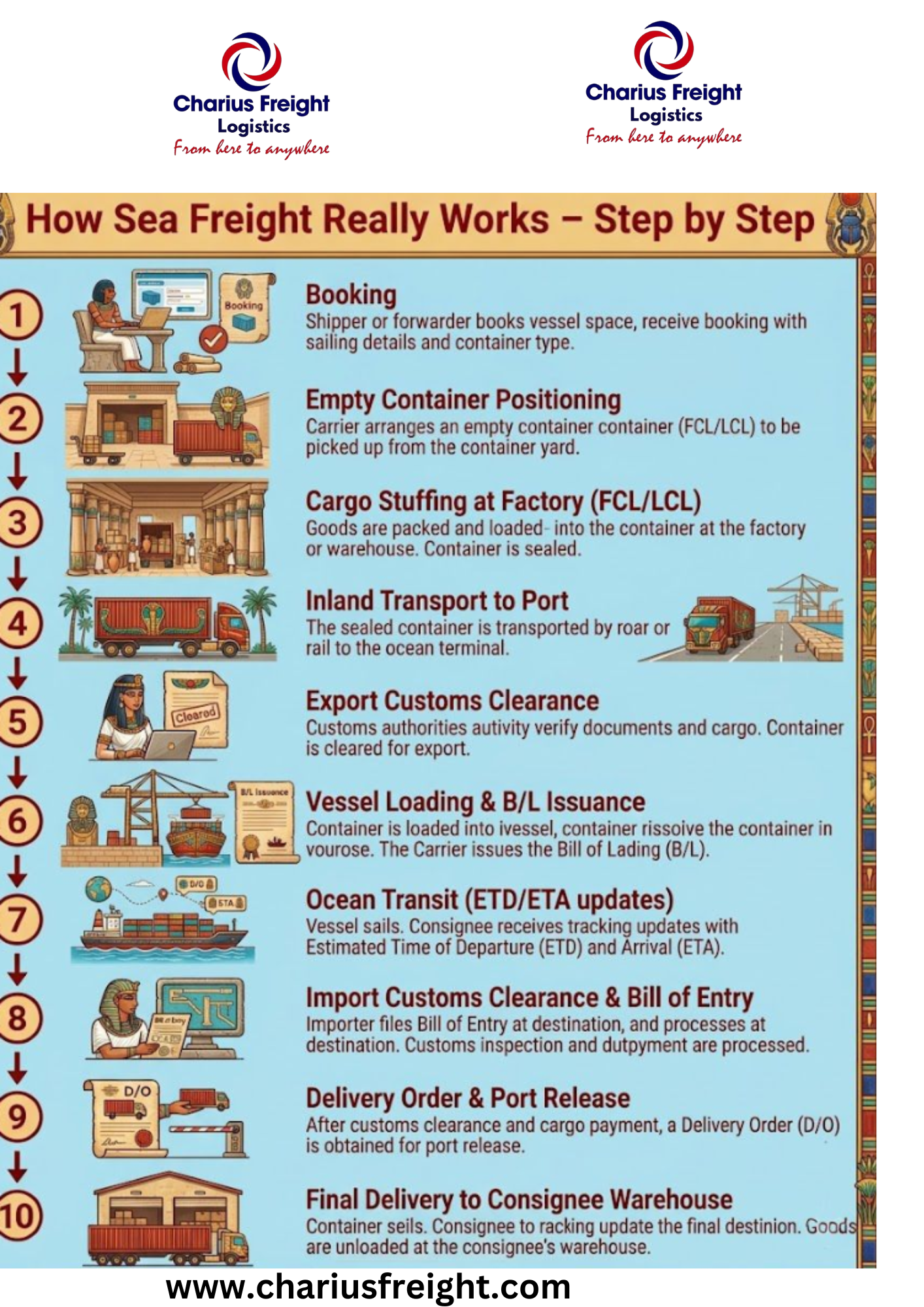
But behind every container is a structured 10-step process that determines cost, compliance, and delivery reliability. Here’s what actually happens 👇
1. Booking Shipper or freight forwarder books space with the carrier. Sailing schedule, container type, and rates are confirmed.
2. Empty Container Positioning Carrier releases an empty container from the yard (FCL/LCL).
3. Cargo Stuffing (FCL/LCL)Goods are packed, loaded, and the container is sealed at factory or warehouse.
4. Inland Transport to Port Container moves via road or rail to the port terminal.
5. Export Customs Clearance Documents are verified. Cargo is cleared for export.
Vessel Loading & Bill of Lading Container is loaded on the vessel. Carrier issues the Bill of Lading (B/L) – the key transport document.
7. Ocean Transit Vessel sails. ETD & ETA updates are shared with the consignee.
8. Import Customs Clearance Importer files Bill of Entry. Duties and inspections are completed.
9.Delivery Order & Port Release After payments and clearance, Delivery Order (D/O) is issued for container release.
10. Final Delivery Container moves to consignee warehouse. Unloading completes the shipment cycle.
💡 Sea freight isn’t just “shipping. ”It’s coordination across booking, documentation, customs, transport, and compliance.
One delay in any step = demurrage, detention, or lost time. The professionals who master this flow don’t just move cargo, they control risk, cost, and customer trust.