CIF (Cost, Insurance & Freight) — Widely Used, Often Misunderstood
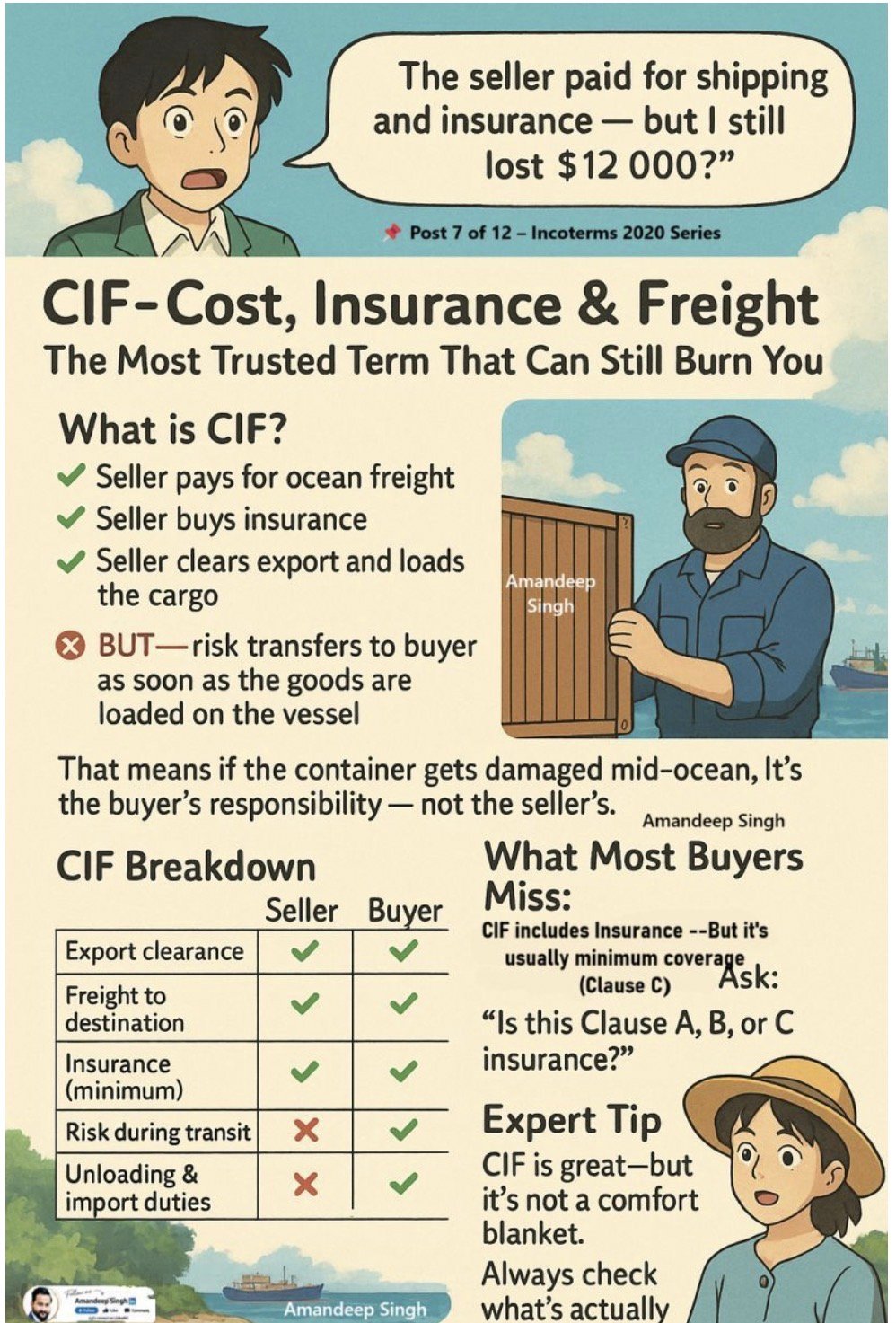
“Seller paid for freight and insurance… so why did the buyer still take the loss?”
That’s the reality of CIF — and many businesses only realize it too late.
🔍 What CIF Really Means
Under CIF:
✔ Seller pays for ocean freight
✔ Seller arranges insurance
✔ Seller handles export clearance
⚠️ But here’s the key:
Risk transfers to the buyer once the cargo is loaded on the vessel.
⚠️ What Many Buyers Overlook
Yes, CIF includes insurance —
but typically it’s minimum coverage (Clause C).
That means:
❌ Limited protection for damage
❌ No coverage for delays
❌ Gaps in port handling risks
💡 Want better protection?
Always confirm Clause A coverage.
📦 Real Scenario
A European buyer shipped high-value goods under CIF.
Cargo was damaged during handling.
Claim was rejected.
📉 Loss absorbed by the buyer.
👉 Why?
Risk had already transferred at loading.
✅ When CIF Works
• Bulk or breakbulk shipments
• When seller manages freight efficiently
• When insurance terms are clearly defined
🚫 When to Be Careful
• Containerized cargo without loading control
• High-value shipments without full coverage
• Air or multimodal shipments
💡 Key Takeaway
CIF is convenient — but it’s not risk-free.
👉 Always ask:
“What exactly does the insurance cover?”
💬 Have you ever relied on CIF and faced unexpected risks?
📩 If you’re unsure whether CIF is the right term for your shipment, feel free to reach out — happy to share practical insights.