Forwarders warn of supply chain disruption following Iran strikes
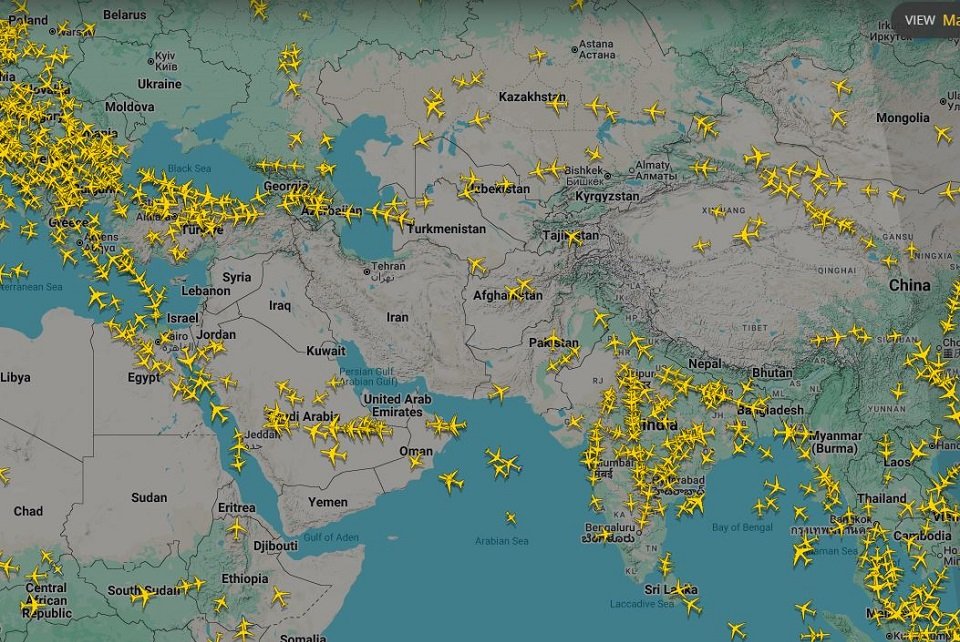
Freight forwarders have warned customers to expect delays, disruptions and rising costs following US-Israel missile strikes on Iran and Tehran’s retaliatory attacks across the Middle East.
In an update, the world’s leading airfreight forwarder DSV warned customers to expect extended transit times and irregular schedules and rate increases after carriers suspended Middle East operations as a result of the missile strikes.
“As the situation remains uncertain, further adjustments to flight schedules and network coverage may occur at short notice,” the forwarder warned.
“Customers should anticipate potential delays or even cancellations, space constraints, and short-notice rate adjustments in the coming days and weeks.”
DSV added that the current disruption is expected to have broader implications beyond the Middle East region as a result of aircraft redeployments, route extensions, service suspensions and a tightening of available capacity across key trade lanes.
On the Far East Europe trade, capacity constraints are anticipated, particularly on Far East–Europe and Asia–Middle East corridors.
Meanwhile, the company also warned customers to expect upward pressure on airfreight rates due to capacity limitations and airlines introducing war risk surcharges, applicable to shipments routed through or near affected regions.
additional surcharge might be implemented at about 10% for the rerouting of the flights due to raised up the cost of fuel for carriers to overfly the risky areas,” he said.
“But the Chinese export cargo market is still recovering from the Chinese New Year and manufacturing hasn’t come to a full circle yet.
“So the lack of supply doesn’t have that crucial effect on the supply chains as of today. If the situation remains unstable further and will last several weeks, this will lead to the rate growth out of China and the tariffs will depend directly on the airline’s rate policy.”
He also said that jet fuel prices could rise and warned that bellyhold operations could take longer to recover, as their priority will be resolving issues in the passenger market.
Artemiy Ivanovskiy, general manager at Air Cargo Global Services DWC-LLC, said that backlogs were already building.
“Inbound flows that arrived before the closures remain in place, but without active outbound operations, the usual transfer function of these hubs is paused.
“This has led to an accumulation of shipments, including time-sensitive goods, which are being maintained in controlled storage conditions where possible”.
The two companies – both part of Air Cargo Network – said they are securing block space agreement space at 10-20% above previous levels, as prices are expected to increase to that level, utilising multiple carriers, prioritising urgent cargo and using sea-air for less time-sensitive shipments.
The group also recommended that customers develop buffer stock and said that it would implement pre-arrival document checks and integrated customs coordination to reduce clearance bottlenecks when airspace re-opens.
UK-based Woodland Group recommended that customers with cargo moving to, from, or through the Gulf region, Red Sea corridor, or Middle Eastern air hubs maintain close communication with their Woodland representative to assess shipment-specific exposure and contingency options.
The company warned of extended flight times and the possibility of war and fuel surcharges being applied. Woodland also warned of “potential schedule volatility across impacted corridors”.