IATA presses the case for three priorities for airfreight
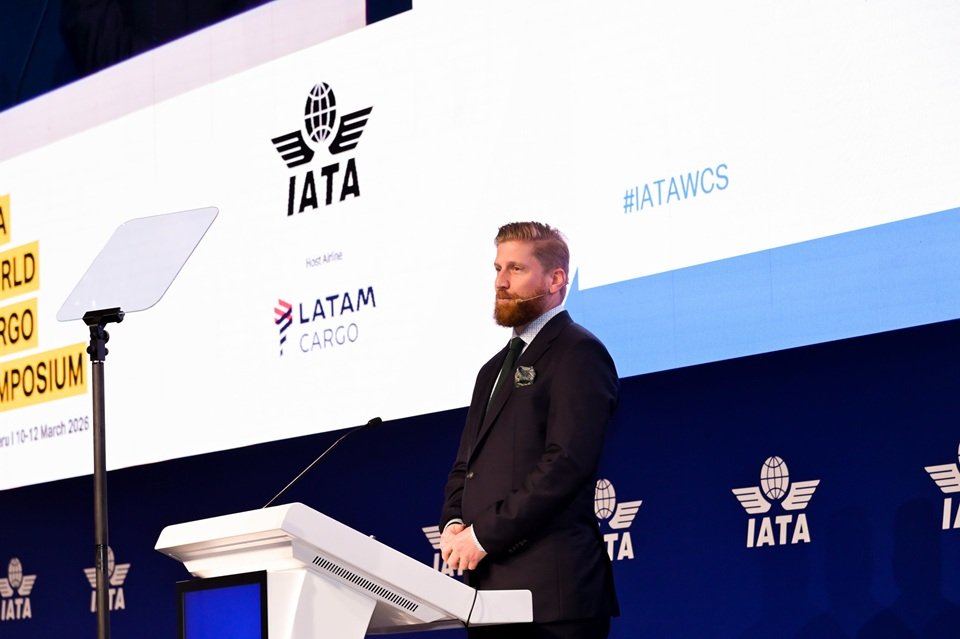
Speaking at the opening of the IATA World Cargo Symposium (WCS) in Lima, Peru, currently under way this week between 10 and 12 March, Brendan Sullivan, IATA’s global head of cargo, has highlighted three priorities for the global airfreight industry.
- Accelerating digitalisation
- Strengthening global standards
- Enhancing safety and security
These seem particularly relevant in the light of the shocks that have impacted global trade and airfreight business in recent times.
Sullivan announced: “Air cargo plays a critical role in connecting businesses to global markets and keeping supply chains moving, even as the operating environment becomes more complex.
“With so many external events impacting global supply chains – including the tariff and geopolitical shocks – it is important that we work on building resilience in areas we can control or influence.”
He continued: “Working together to strengthen digitalisation, global standards and supply chain security will position air cargo well to continue supporting economic growth by connecting products to markets.”
Gathering momentum on digitalisation
According to Sullivan, “Air cargo data still sits in fragmented systems across the supply chain, creating duplication, delays and compliance risks.”
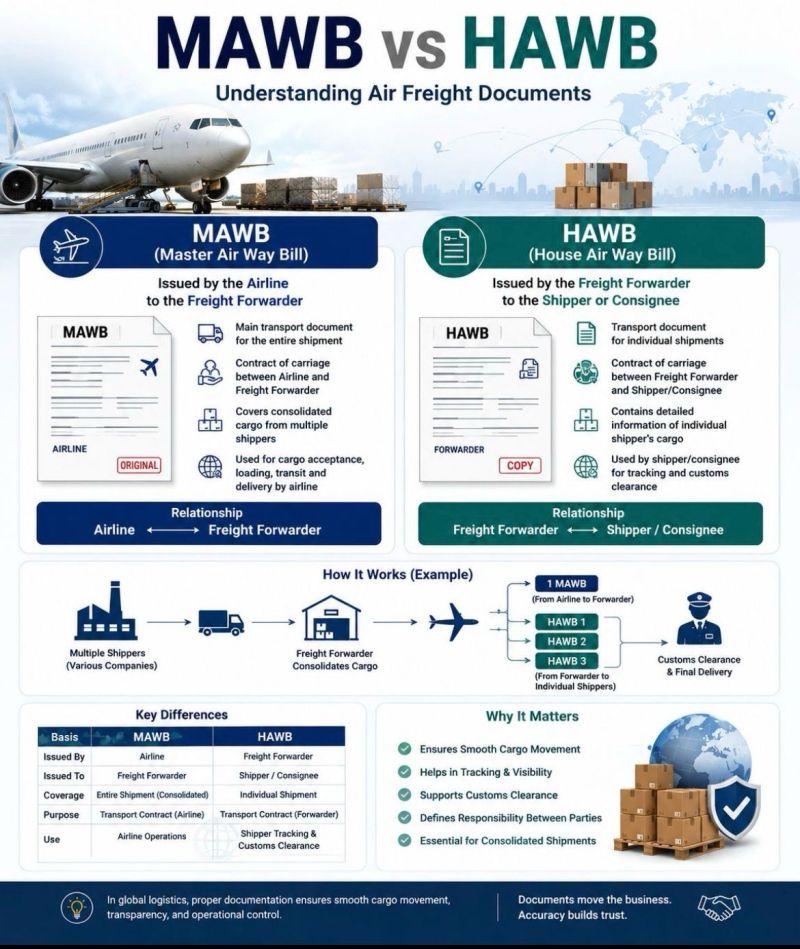
This situation is a particular issue for high-volume segments such as e-commerce, where house waybill data (AWB) must remain aligned with airline master AWB records across multiple systems and jurisdictions.
But IATA’s own ONE Record standard represents a foundational shift in how the industry can share, manage and trust data across the supply chain, he said.
ONE Record acts as an industry standard for end-to-end cargo data sharing, and IATA regards it as the preferred method for cargo data exchange.
Although the big airlines accounting for more than 70% of global AWB volumes are said by the trade body to be “on track for implementation”, progress can generally be accelerated, Sullivan declared.
He proposed: more airlines and forwarders scaling implementation; governments accepting ONE Record data in regulatory filings; and technology providers building and deploying secure, interoperable platforms.
Reinforcing global standards
To ensure that air cargo can move efficiently across borders, IATA is focusing on strengthening global standards in two key areas:
- Dangerous Goods Regulations (DGR): The number of state and operator variations for the handling of dangerous goods has grown to over 1,200, IATA has estimated. This adds complexity in an industry where safety is built on global standards, Sullivan noted. While variations will always exist, IATA is of the opinion that they should remain transparent, justified and as closely aligned as possible with global standards
- Airport slots: Fair access to infrastructure is essential for efficient cargo operations. Yet, Sullivan opined, at some major hubs, cargo carriers often receive only temporary or ad hoc slots rather than historic allocations. This limits operational flexibility and long-term planning and IATA has emphasised that slot allocation should follow the principles set out in the Worldwide Airport Slot Guidelines
Sullivan remarked: “Global standards and fair access to infrastructure are essential. As global trade evolves, aligning regulatory requirements and ensuring transparent slot allocation will be critical to maintaining reliable air cargo connectivity.”
Safety and security in airfreight
Focus is needed to ensure that dangerous goods safety frameworks and cargo security processes across the supply chain keep pace with evolving operational and security risks, IATA has stressed.
For safety relating to dangerous goods, International Civil Aviation Organization (ICAO) Annex 18 acts the global foundation for the safe transport of dangerous goods by air.
However, IATA has highlighted that modernisation is needed to ensure regulations reflect today’s digital and fast-moving supply chains and address emerging risks such as undeclared dangerous goods and lithium battery misuse.
As regards cargo security, airfreight supply chains are potential targets for malicious disruption. The cargo Consignment Security Declaration (CSD) is a critical compliance tool, but implementation remains uneven across jurisdictions.
IATA has called for the wider adoption of electronic CSD (e-CSD) solutions to improve data accuracy, reduce manual processes and support more efficient security oversight.
It has also highlighted the need for greater alignment across pre-loading advance cargo information programmes.
Sullivan pointed out: “Safety and security are shared responsibilities across the entire cargo ecosystem.
“Modernising global frameworks and strengthening cooperation between governments and industry will be essential to ensuring that global trade continues to move safely and securely.”
Welcome to Lima
Prior to stating the case for these airfreight priorities, Sullivan welcomed attendees to this week’s IATA WCS in Lima.
He noted that this is the first time that WCS has been held in South America and he described this as “long overdue”, given the vital role that air cargo plays on “this amazing continent”.
This year, the Symposium’s theme is ‘Advancing Air Cargo in a Dynamic World’.
The industry is “dynamic from almost every angle – geopolitics, trade, technology and more”, he said, adding: “Our task is clear: to navigate change and deliver the connectivity the global economy depends on.
“The months ahead will test our resolve. Evolving US trade policies are reshaping trade flows.
“Hostilities in the Middle East are disrupting airspace and adding operational complexity. The operating environment is becoming more uncertain – not less.”
And, in conclusion, at the end of his presentation Sullivan said: “Advancing air cargo in a dynamic world means ensuring that [shipments] continue to move safely, reliably and predictably, no matter how the world changes.
“Because global trade will continue to evolve. And air cargo will continue to enable it.”