Poor air cargo data quality drives up costs and blocks AI adoption
Inaccurate data is driving up airline costs and hindering future digital development, according to a survey by consultancy Rotate.
The survey of staff from 19 airlines – representing around 35% of global available freight tonne kilometres – found that airlines are suffering from common data issues from customer definitions to load factor quality.
Respondents said that these data issues have an impact on cost and revenue; block airlines from bigger developments such as digital or AI adoption; and budget and resources are limited to building capabilities to future-proof cargo.
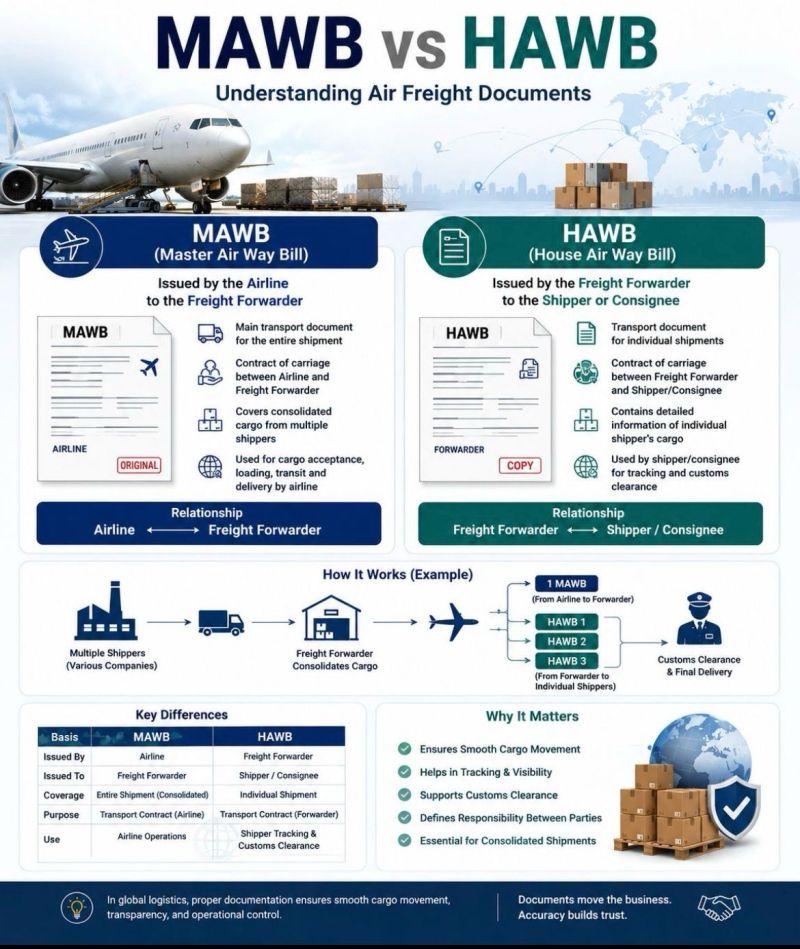
Among the key findings, 95% of airlines reported problems with data definitions, such as customers appearing under different names across systems; and 21% estimate that more than 10% of Air waybills (AWB) have errors, while 44% said they wouldn’t know how to estimate that.
These widespread data gaps threaten air cargo’s ability to adopt artificial intelligence and next-generation digital capabilities, Rotate said.
Costly errors
Air waybill inaccuracies can also result in airlines failing to bill for services provided, while additional costs are incurred through the manual correction of data, the consultancy said.
Meanwhile, 74% of respondents said they had experienced issues with load factor accuracy and 32% do not actively monitor the costs of inaccurate messages.
Speaking to Air Cargo News, Rotate chief executive Ryan Keyrouse said inaccurate load factor data, for example, can lead to cargo being offloaded if aircraft are overloaded, fines from customs due to misreporting and reduced ability to optimise aircraft utilisation.
 Ryan Keyrouse, Rotate. Image: ©
“There is also a revenue risk,” he said. “If a pallet arrives with more cargo than was booked – and the data is not properly captured or reflected in systems – airlines may be underbilling customers.”
While discrepancies may be identified at the terminal when shipments are weighed and dimensioned prior to loading, Keyrouse noted that the updated data does not often flow back into commercial systems, preventing invoices from being adjusted.
Rotate’s survey supports this with 79% of airline respondents stating revenue leakage as a problem with 16% believing it could be up to 5% of revenue.
Block development
Rotate warned that organisations struggling with “basic data foundations” will also face challenges deploying AI and next-generation digital tools, including dynamic pricing.
This was reflected in the survey results, which showed that only 27% of respondents currently have access to predictive data, 32% have deployed AI or predictive models, and 43% are still exploring use cases or have no plans to invest.
One head of cargo who took part in the survey said: “The foundations for the way we want to work in 2035 are being laid today.”
However, Rotate said that most airlines face structural gaps in capability to address data quality issues and truly develop Ai solutions, with 92% of respondents relying on centralised group resources for engineering and technology projects (that can often prioritise passenger initiatives).
Keyrouse said that Rotate has launched a new Data Services practice aimed at helping the air cargo industry improve data accuracy by providing professional services from data strategy to data engineering consulting.
Rotate’s Data Services will have the support of the firm’s strategy consulting team to help focus on value and priorities.
The unit will be led by Thomas Schummer as vice president and head of data services.
Schummer brings more than 15 years of experience in analytics and data engineering – and has a track record of helping organisations adopt new technologies and better utilise data through consultancy and engineering roles.
 Thomas Schummer, Rotate. Image: ©
For airlines looking to start address data and AI capabilities, Schummer warned: “A common pitfall is looking at this purely from an IT perspective, but digital transformation is not just a technology issue, it requires investment across people, processes and organisational structures.”
Schummer added that cargo airlines must prepare for evolving customer expectations toward 2035, including GenAI-powered interactions, agent-based bookings, dynamic pricing, digital twins, IoT and real-time data services, all of which require building on a solid foundation.
Rotate ended with “We want to help fix data quality issues at the source through data strategy and data engineering consulting.”