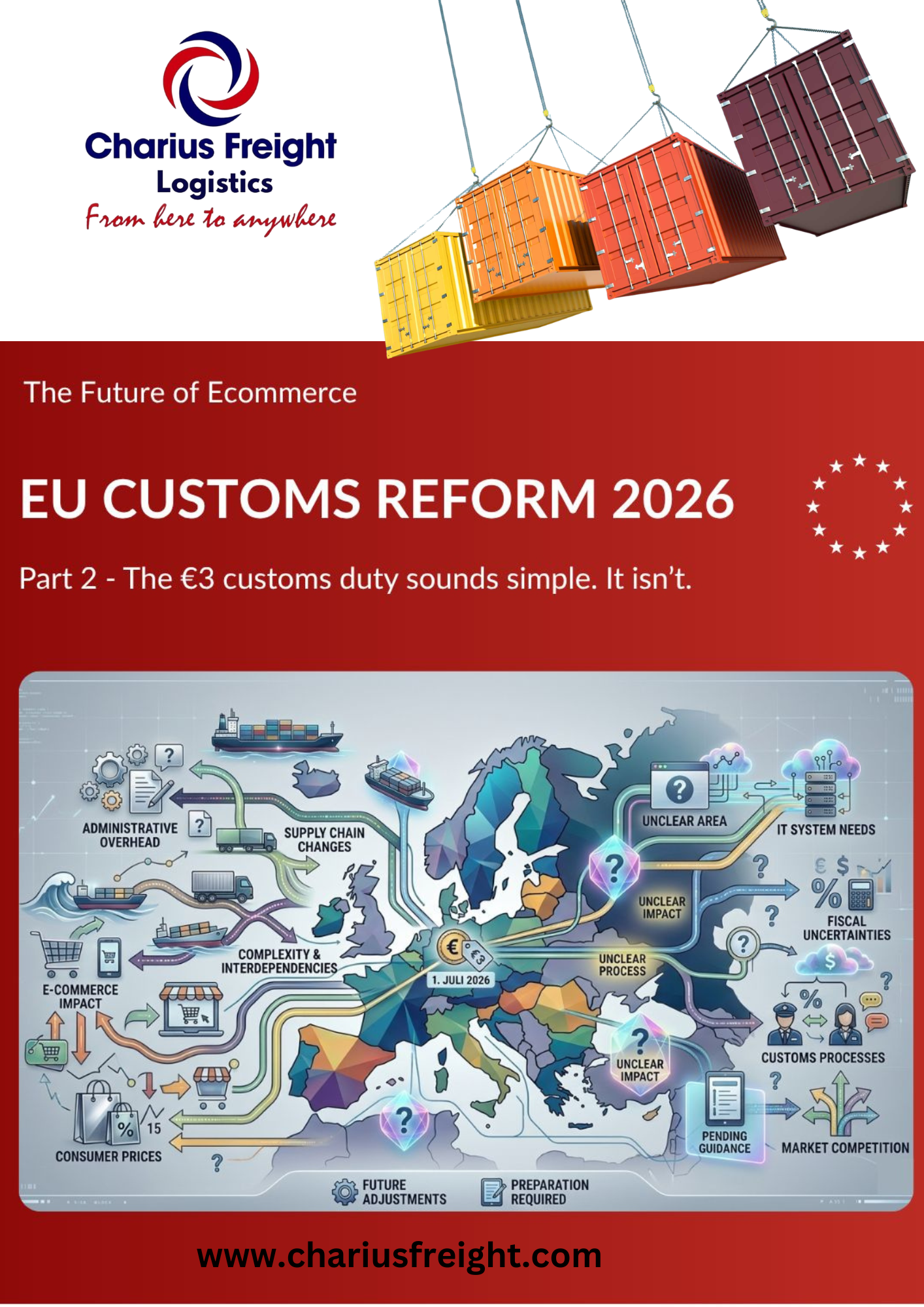
𝗜𝗺𝗽𝗮𝗰𝘁 𝗼𝗳 𝗘𝗨 𝗖𝘂𝘀𝘁𝗼𝗺𝘀 𝗥𝗲𝗳𝗼𝗿𝗺 𝟮𝟬𝟮𝟲 – 𝗣𝗮𝗿𝘁 𝟮 𝗧𝗵𝗲 €𝟯 𝗰𝘂𝘀𝘁𝗼𝗺𝘀 𝗱𝘂𝘁𝘆 𝘀𝗼𝘂𝗻𝗱𝘀 𝘀𝗶𝗺𝗽𝗹𝗲. 𝗜𝘁 𝗶𝘀𝗻’𝘁.
𝗜𝗺𝗽𝗮𝗰𝘁 𝗼𝗳 𝗘𝗨 𝗖𝘂𝘀𝘁𝗼𝗺𝘀 𝗥𝗲𝗳𝗼𝗿𝗺 𝟮𝟬𝟮𝟲 – 𝗣𝗮𝗿𝘁 𝟮
𝗧𝗵𝗲 €𝟯 𝗰𝘂𝘀𝘁𝗼𝗺𝘀 𝗱𝘂𝘁𝘆 𝘀𝗼𝘂𝗻𝗱𝘀 𝘀𝗶𝗺𝗽𝗹𝗲. 𝗜𝘁 𝗶𝘀𝗻’𝘁.
From 1 July 2026, the €150 duty exemption disappears — replaced by a flat €3 duty per item, applied per tariff sub-heading (the first six digits of the HS code).
But the practical implications run much deeper.
Consider a USB-C cable or a printed magazine. Under the current Common Customs Tariff, both often attract 0% duty. Will they still face the €3 charge from July? How does Preferential Tariff Treatment interact with the new rules? The implementing acts haven’t landed yet. Everyone is waiting.
Meanwhile, the maths is already stark. An order spanning four or five different product categories hits €12–15 in customs duty alone — before the EU-wide handling fee arrives in November 2026. Low-value B2C consignments are becoming high-cost shipments.
𝗧𝗵𝗶𝘀 𝗰𝗿𝗲𝗮𝘁𝗲𝘀 𝗮 𝗴𝗲𝗻𝘂𝗶𝗻𝗲 𝘀𝘁𝗿𝗮𝘁𝗲𝗴𝗶𝗰 𝗱𝗶𝗹𝗲𝗺𝗺𝗮:
→ For electronics (0% tariff) or textiles (8%), the flat €3 duty is often 𝗺𝗼𝗿𝗲 𝗲𝘅𝗽𝗲𝗻𝘀𝗶𝘃𝗲 than the standard percentage-based rate. There’s a real incentive to consolidate parcels by tariff heading — or push order values above €150.
→ Leaving IOSS suddenly looks attractive from a pure customs perspective. Without IOSS, a percentage duty applies — often far cheaper than €3. But the trade-off is steep: VAT consolidation breaks down, and the model of routing parcels through just 4 EU entry countries collapses. Under non-IOSS, customs clearance must happen in the consumer’s country — and most EU customs authorities are completely unprepared for the additional volume, lacking both inspection capacity and digital capability.
𝗪𝗵𝗮𝘁 𝘁𝗵𝗲 𝗘𝗨 𝗮𝗰𝘁𝘂𝗮𝗹𝗹𝘆 𝘄𝗮𝗻𝘁𝘀 is a structural shift to EU warehousing: non-EU suppliers importing in bulk (B2B) rather than parcel-by-parcel. The reform is deliberately designed to make direct imports painful. Customs believes it can control bulk flows more easily.
Whether that strategy will work — and what the real-world consequences will be — is what we tackle in Part 3.
💬 Are you rethinking your logistics model because of this? Tell us in the comments.
follow us on our Facebook page ,for more global news